Boost Library
InternalStage 1-1The internal hub that connects Claude Code and other AI clients to company systems.

- My commits / all
- 394 / 433
- Gateway tools in code
- 25
- Integration providers
- 6
- AI clients checked
- 6
Internal system at Boost Capital, not public.
- React 19
- NestJS 11
- Prisma
- PostgreSQL
- MCP
- OAuth 2.0
- Nx
- Cloud Run
- Terraform
About
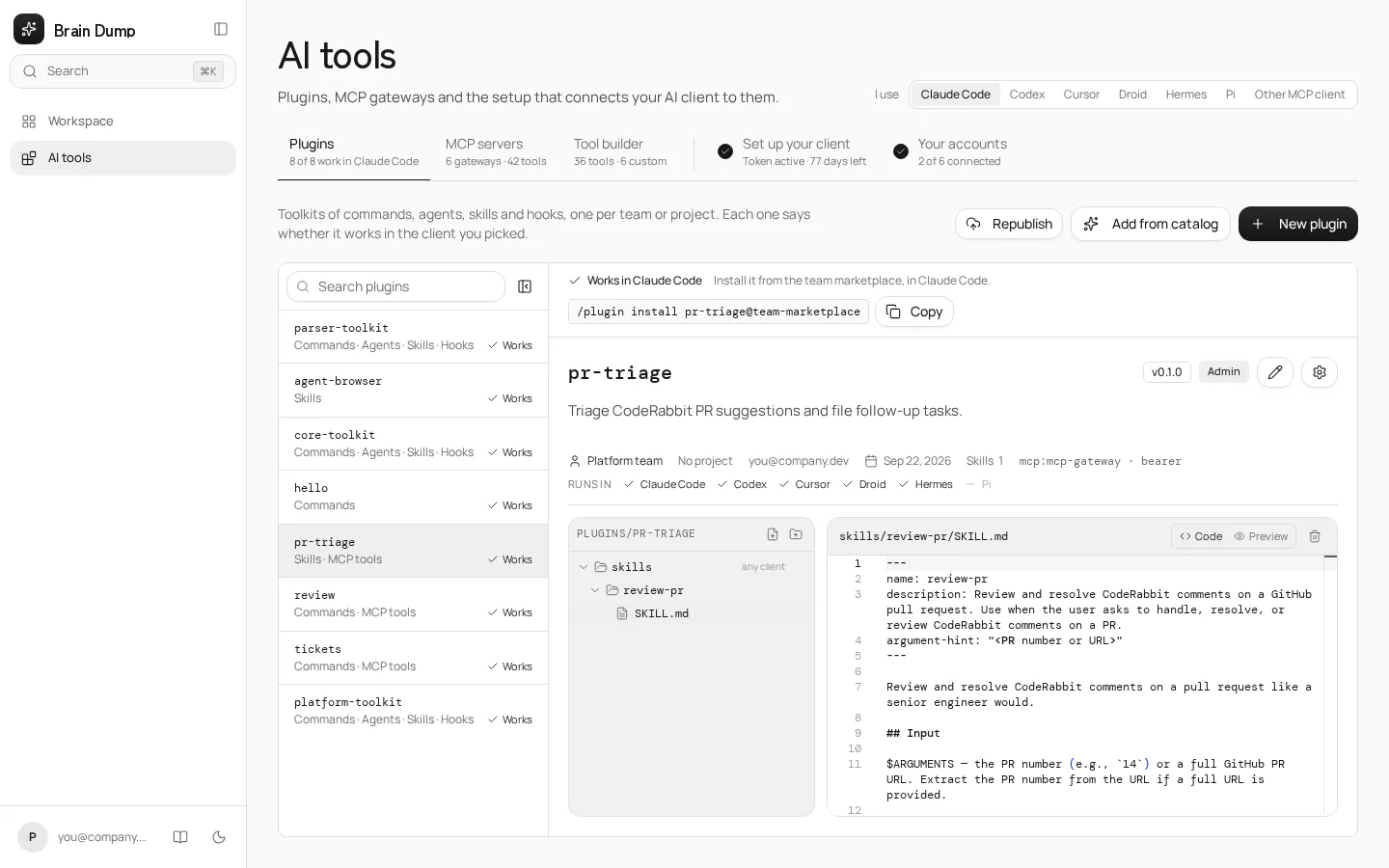
Engineers install team plugins from one catalog, connect their own ClickUp, GitHub and Google accounts once, and call company tools through a hosted MCP gateway where every action runs as the person who asked. The same app is the knowledge hub that people and agents both read and write.
Highlights
- Plugin marketplace (commands, agents, skills, hooks) that publishes itself as a Claude Code marketplace and says, per plugin and per file, which AI clients it runs in.
- Hosted MCP gateway on NestJS: personal access tokens with read/write scopes, every tool call made with the caller's own credential and logged under their name.
- Tool builder that turns any internal HTTP endpoint into a typed MCP tool from a declarative spec.
2 more
- One-click OAuth with refresh tokens for ClickUp, GitHub and Google; credentials live in Secret Manager, never in the database.
- Knowledge hub replacing ClickUp Docs and Confluence: spaces, page trees with revisions, per-space roles and an activity log.
How it flows
From start to goal, the path the data takes
- AI client
- MCP gateway · token + scope
- Tool · code or HTTP spec
- Provider API · caller's own credential
Local development instance (in-app name: Brain Dump). Internal names and accounts are generalised in these figures.